If your child goes to childcare, you’ve probably seen “EYLF” on the enrolment forms, in a daily update or on a poster near the sign-in desk. Educators mention “learning outcomes” too, usually in a hurry at pick-up. Hardly anyone stops to explain what any of it means.
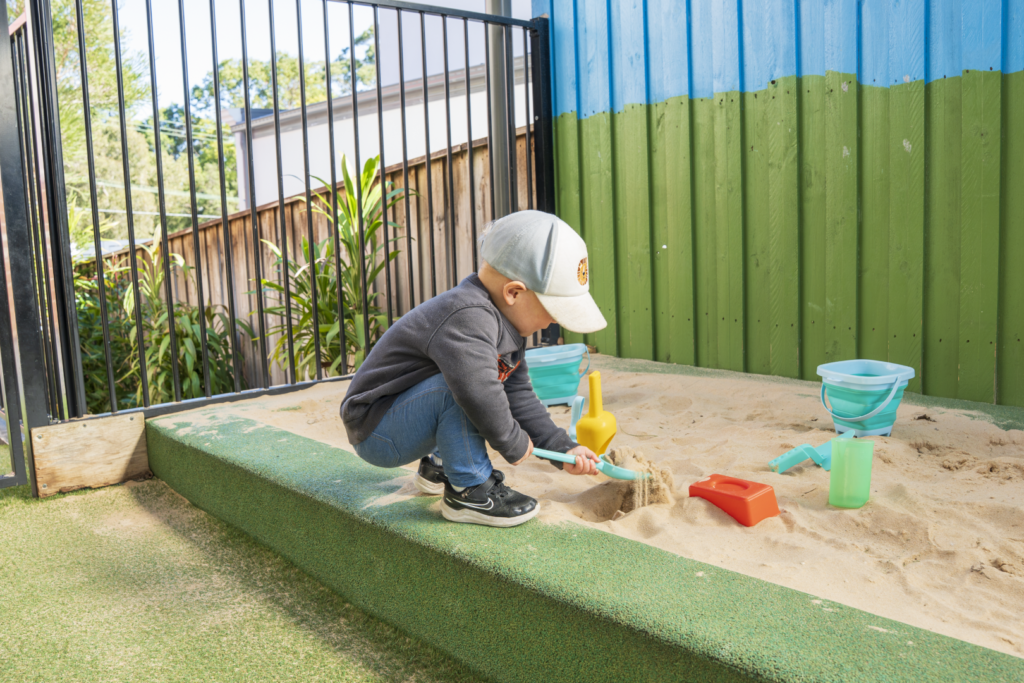
This post goes through the EYLF learning outcomes, one at a time, and shows what each one looks like in your child’s actual day. Some of it happens at story time. A surprising amount of it happens in the sandpit.
EYLF stands for the Early Years Learning Framework. It’s Australia’s national guide for how children from birth to five should be cared for and taught in early learning settings, including long day care and preschool. The Australian Government introduced it in 2009 and updated it in 2022, and it guides early learning centres right across the country.
The word “framework” makes it sound like a rulebook. In practice, it’s closer to a shared set of goals. It describes what children should be getting out of their early years and leaves the how up to educators, so nobody hands them a plan for 10:15 on a Tuesday.
That leaves educators free to plan around the children in front of them. If a group of four-year-olds becomes obsessed with the garbage truck that comes past every Thursday, a good educator might turn it into a week of sorting, counting and talking about where rubbish goes. Play and relationships come first, and each child moves at their own pace. The five learning outcomes describe what all that play is meant to build.
Educators often call these “the EYLF 5 learning outcomes”, or just “the outcomes”. They aren’t tests, and they don’t come with age cut-offs. Each one describes something educators want every child to build on over time, at their own pace.
This one is about feeling safe and knowing you belong. A child who feels secure at childcare can get on with the business of playing and making friends, while an unsettled child spends a lot of their energy just coping. It also helps children work out who they are. That includes small things, like spotting their own name on a bag hook, and bigger ones, like feeling proud of their family and what they can do.
That’s why centres put so much effort into the basics. Your child should see the same educators most days, and those educators should know them well: their comfort toy, how they like to be settled for a nap, the name of the family dog. Predictable routines help as well. When a toddler knows that lunch comes after outside play, the day feels less overwhelming.
Young children start out thinking the world revolves around them, which is completely normal. This EYLF outcome is about gradually widening that circle, first to the other kids in the room and eventually to other cultures and the natural world.
In a centre, it might look like a group of children looking after a veggie patch, or collecting old clothes for a local charity. It’s in the cultural celebrations families are invited to share, and in learning the local Aboriginal name for the area. Group activities count too, because waiting your turn and helping a friend tidy up are the first small steps of contributing to a community.
Wellbeing covers both body and mind. It includes eating well, moving a lot and resting properly, along with handling big feelings and slowly learning to do things for yourself.
You’ll see this learning outcome at mealtimes, when children serve themselves and try new foods without anyone pushing. You’ll see it outside in all the running and digging, and after lunch when the room goes quiet for rest. Educators work on the emotional side too, helping a child put a name to a feeling (“You look really disappointed that it’s raining”). And when a three-year-old finally gets their own shoes on, after ten minutes and a fair bit of muttering, that counts as well.
This outcome is about curiosity, and about sticking with something when it gets tricky. A child who wants to find out how things work is in good shape, even if they rarely get it right the first time.
Educators build it through play-based learning and open-ended materials, things like blocks, loose parts, clay and paint that can become almost anything. They’ll ask questions back (“What do you think will happen?”) instead of jumping in with the answer. Children who are used to having a go and getting it wrong usually arrive at school much more willing to try.
This is where early language, literacy and numeracy sit. It also covers listening, taking turns in a conversation and getting your message across, whether that’s with words, gestures, drawings or a very determined point at the biscuits.
In practice, it looks like reading aloud every day, educators chatting with children constantly and lots of songs and rhymes. Children also do plenty of mark-making, which is the early scribbles, squiggles and “writing” that come before real letters. Counting the plates at lunch or spotting the number on a bus is part of this EYLF learning outcome as well.
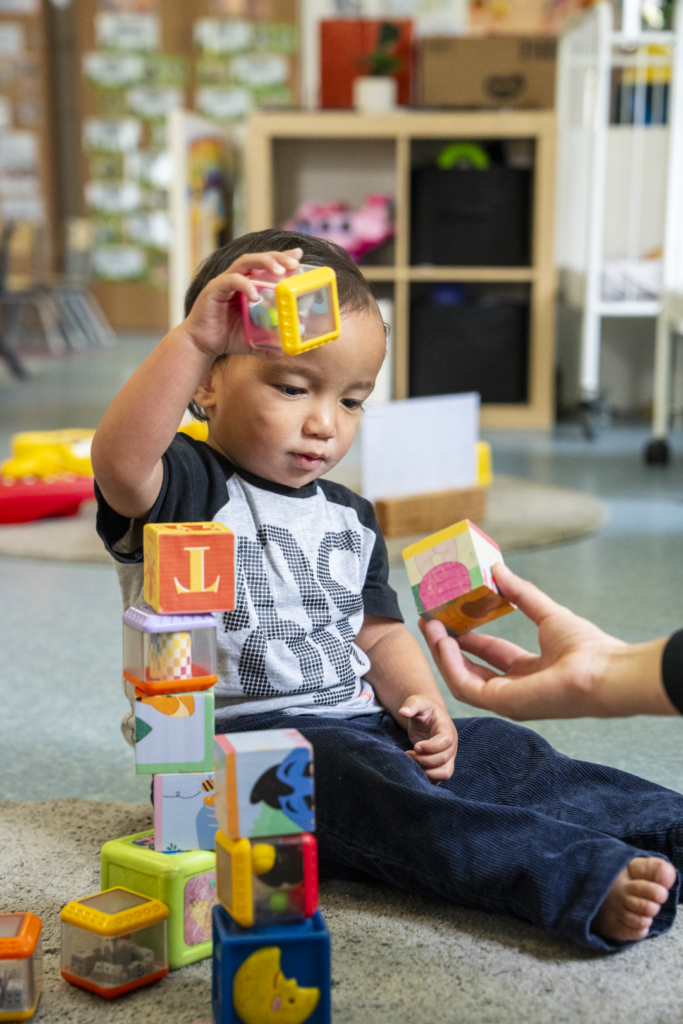
You won’t usually see an EYLF outcome labelled on the wall. It shows up in ordinary moments, and one activity often covers two or three outcomes at once.
Take the block tower. Your child builds it, knocks it over and starts again, and that’s Outcome 4 in action. They’re experimenting, working out what makes it wobble, and learning that a fallen tower isn’t a disaster. The educator nearby asking “How could we make it taller?” is part of the learning too.
Drop-off counts as well. If your child walks in and heads straight for the educator they know, with a quick wave to mum or dad from the window, that’s Outcome 1. It means they feel safe there. Getting to that point can take weeks, which is completely normal.
Outcome 2 often looks a bit muddy. In plenty of centres, the preschool room checks on a worm farm and talks about what worms like to eat (and, inevitably, whether worms have faces). Children learn that living things need looking after, and that they can be the ones doing it.
Then there’s the pretend shop, where two children argue over how much a banana costs. That’s mostly Outcome 5. They’re using numbers and negotiating, listening some of the time and putting their ideas into words. Plenty of learning outcomes EYLF educators plan for turn up in games like this without anyone announcing them.
Every centre will tell you it follows the EYLF. These questions help you find out how it actually plays out, whether you’re on a tour or at a parent meeting.
The EYLF makes a lot more sense once you’ve watched it happen in a room full of busy kids. If you’re looking for childcare in Sylvania, come and see how our educators bring the five learning outcomes into everyday activities. book a free tour at Oak Tree Early Learning Centre. Bring your questions (including the ones above). You don’t need to be ready to enrol, and there’s no pressure either way.