Watching your child grow is one of the best parts of being a parent, and one of the more nerve-racking ones. One week they can barely hold their head up. A few months later they’re pulling every book off the bottom shelf. Somewhere in there, most mums, dads and carers quietly wonder whether their little one is on track.
This guide covers the stages of childhood development from birth to school age: what usually happens at each stage, how educators help, and when it’s worth asking for advice.
Child development isn’t a race. Two babies born on the same day can reach the same milestone months apart, and both be perfectly healthy. Personality plays a part, and so do things like family routines and whether there’s an older sibling to copy.
Developmental stages are still useful, though, because they give parents and educators a shared way of talking about a child. Developmental milestones are the skills most children pick up within a broad age range, like smiling, walking or putting words together. The range is the important part. Plenty of healthy children reach a milestone early or late. Used well, milestones help adults see where a child is flying and where a bit of extra support might help.
In Australia, early learning centres work with the Early Years Learning Framework (EYLF), the national framework for children from birth to five. It doesn’t hand educators a list of boxes to tick. It sets broad outcomes, such as children having a strong sense of identity and wellbeing and growing into confident, involved learners. Educators pair those outcomes with what they see each child doing day to day, then plan play and learning around it.
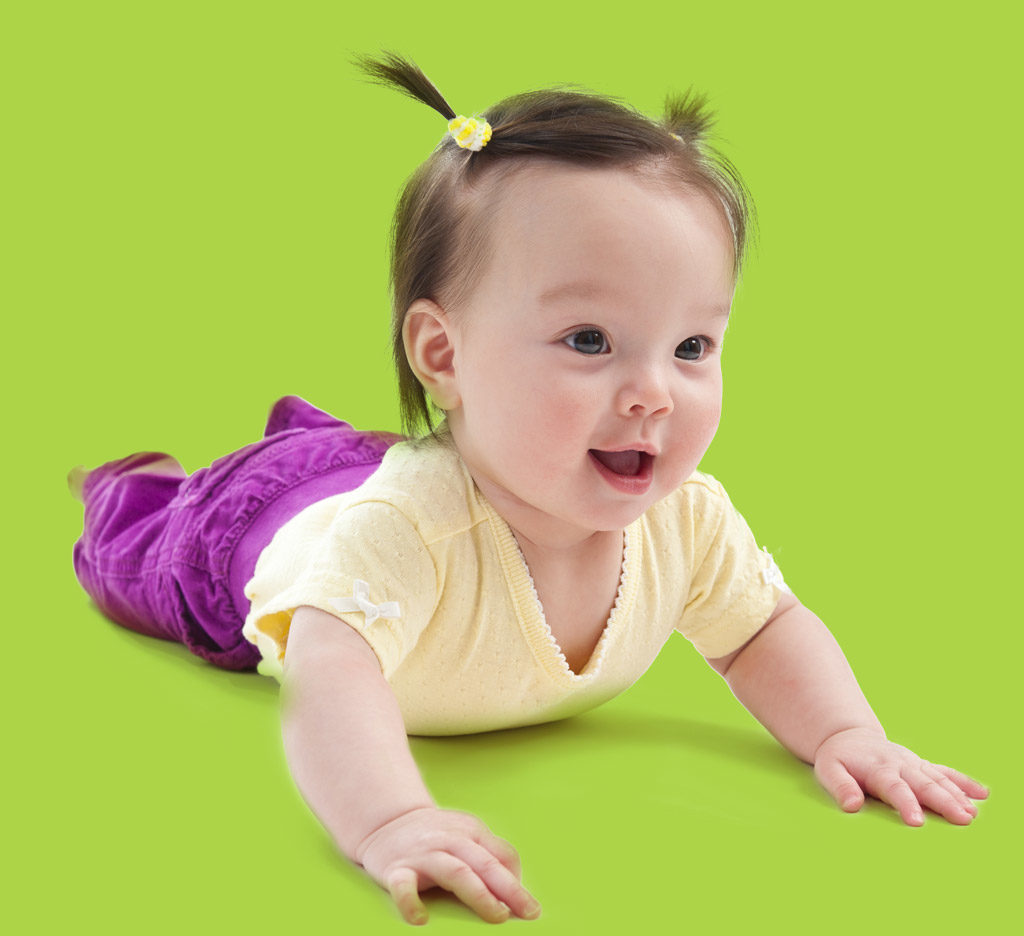
Babies change faster in their first year than at any other time. A newborn can’t do much more than feed, sleep and grip your finger. By their first birthday, plenty are crawling, cruising along the couch or waving at the dog. These early childhood milestones come quickly, and rarely in exactly the same order twice.
Physically, head control usually comes first. Rolling follows, then sitting with support, then sitting alone. Towards the end of the year, many babies start pulling up to stand on furniture (or on you). Some skip crawling entirely and go straight to bottom-shuffling or walking, which surprises a lot of parents but is quite common.
Thinking skills grow just as fast. In the early weeks, babies start following faces and moving objects with their eyes. Later they work out cause and effect, which is why the spoon keeps ending up on the floor. You pick it up, they drop it again, and they watch your face the whole time. As far as they’re concerned, it’s an experiment worth repeating.
Language starts well before words. Cooing turns into babbling, those strings of “ba-ba-ba” and “da-da-da” that copy the rhythm of real speech. Most babies turn when they hear their name, and recognise familiar voices, months before they say anything you’d count as a word.
Emotionally, the first year is about attachment: the close bond a baby forms with the people who look after them. Social smiles usually appear in the first couple of months. Babies show how they feel by crying, laughing and reaching for you, and many become wary of strangers in the second half of the year.
In a good infant room, each baby has the same few educators day after day, so they can form a secure bond with someone familiar. The days include plenty of sensory play, like water, music, different textures and tummy time. Feeds and sleeps follow your baby’s own cues as much as possible instead of a fixed timetable.
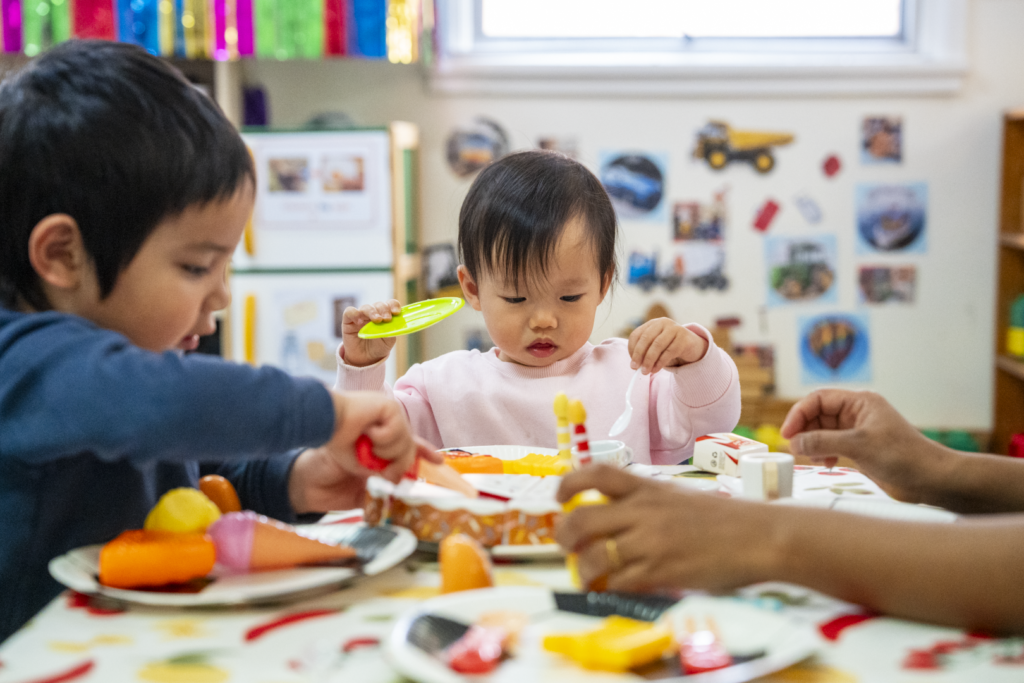
The toddler years are loud and fast. Between one and three, children go from wobbly first steps to climbing anything that holds still long enough, and their personalities start coming through clearly.
Most toddlers walk somewhere around their first birthday, give or take a few months. Running, climbing stairs and kicking a ball come after. Their fine motor skills improve too. (These are the small, careful movements of the hands and fingers.) That’s what lets them stack blocks, turn pages one at a time and scribble with a chunky crayon.
You’ll also start to see symbolic play, which means using one thing to stand in for another. A banana turns into a phone. A cardboard box becomes a car with very particular rules. Toddlers solve problems by trial and error as well, trying the square block in every hole until one fits.
Language often takes off in this stage. First words tend to arrive around the first birthday. Somewhere between 18 and 24 months, many toddlers go through a vocabulary explosion, when new words seem to appear every day. By three, lots of children are using short sentences, but the normal range is wide and plenty of children start talking later.
Socially, toddlers mostly play next to each other rather than with each other. Educators call this parallel play. Separation anxiety often peaks around now, so expect a few teary drop-offs. Tantrums come with the territory too. A toddler has strong feelings without the words or self-control to handle them yet, so a meltdown is often the only way they can tell you something’s wrong.
A good toddler room is full of talk. Educators chat about what they’re doing, sing, read and ask questions all day. Children learn through play, so you won’t see worksheets. Educators also use emotional coaching, which means naming a feeling (“You’re cross because it’s time to pack away”) and staying calm while the child works through it.
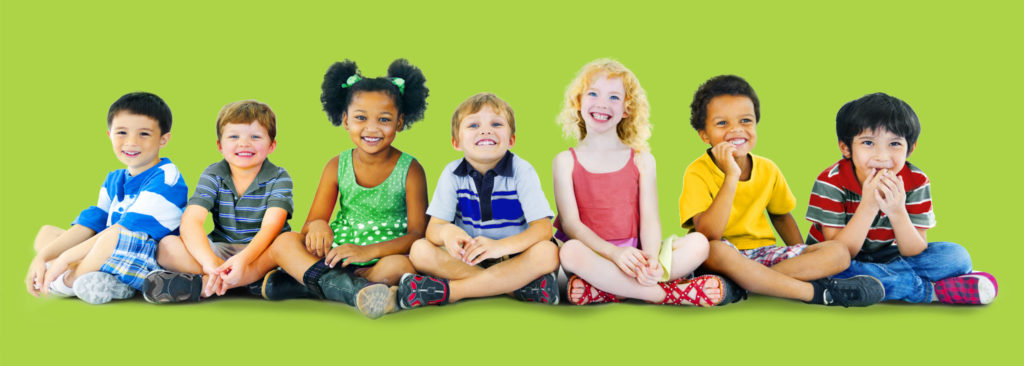
From three to five, children get more independent and much chattier, and they want to know how everything works. For many families, this is also when school starts to feel close.
Their bodies get more coordinated. Preschoolers can usually throw, catch and kick a ball with more control, hop on one foot and walk along a low beam. Their hands get steadier as well. They learn to use child-safe scissors and grip a pencil properly, and their drawings of people start as a head with legs before slowly gaining a body and arms.
Pretend play gets more elaborate, with characters, storylines and rules that change halfway through. Early maths shows up as counting, sorting and comparing, usually in the form of “She’s got more than me!” Early literacy looks like recognising letters, especially the ones in their own name, and asking for the same book every night for a month.
Preschoolers talk in full sentences and can tell you about their day, sometimes at great length. They make up stories. They also ask “why” about almost everything, because questions are how they make sense of the world.
Play becomes cooperative. Children work towards a shared goal, take turns and negotiate (loudly, at times). Proper friendships form, and children get better at handling frustration, although they still need an adult close by when things go wrong.
A good preschool program mixes structured activities with free play. Group time, music and shared projects help children practise cooperating and listening. Educators also work on school readiness. Most of that is about independence and confidence, like managing their own lunchbox, following a routine and getting along with other kids. Reading early is a much smaller part of it.
Nearly every parent wonders about this at some point. Children’s developmental milestones happen across a range, and most children are uneven. A child who talks early might walk late, and the reverse is just as normal.
You still know your child better than anyone else does. If something doesn’t sit right with you, talk to someone about it. Your child’s educators are a good place to start. They see your child every week alongside lots of other children the same age, so they can tell you what they’ve noticed and whether it matches what you’re seeing at home.
Your GP or local child and family health nurse can help too. In NSW, your child’s Blue Book (the Personal Health Record you were given when your baby was born) includes regular developmental checks, so take it along to appointments.
If your child would benefit from extra help, your GP may refer you to someone like a speech pathologist or a paediatrician, a doctor who specialises in children’s health. This kind of support is often called early intervention, and it tends to work best in the early years, while young brains are developing quickly. Many parents who ask find there’s nothing to worry about. For those who do need support, asking early means their child gets it sooner.
Children don’t move through the stages in childhood on a neat schedule, so the care around them has to shift as they grow. A few things matter at every age, though.
Small groups give educators time to learn how each child communicates, what they love and when they need a nudge. Consistent educators matter for a similar reason. Children feel safer with familiar faces, and a child who feels safe is far more likely to have a go at something new.
A play-based curriculum makes sense because play is how young children learn. Block towers, dress-ups and climbing frames build the skills that reading, maths and problem solving rely on later. Following the EYLF means educators observe each child, record their progress and plan around that child’s interests and early childhood developmental milestones instead of a fixed program.
That’s the approach our educators take at Oak Tree Early Learning Centres, with babies, toddlers and preschoolers alike.
Looking for childcare in West Pymble or Sylvania? We’d love to show you around. Book a tour at Oak Tree centre, meet our educators, explore the rooms and ask us any questions you have. There’s no pressure to enrol. We know choosing childcare takes time, and we want you to find a centre that feels right for your family.